
House prices in Greece are still rising, but at a much slower pace than two years ago. The situation varies significantly from region to region. According to the Bank of Greece, apartment prices increased by 7.7% year on year in the third quarter of 2025, which is down from an annual increase of 9.1% in 2024 and a peak of 13.9% in 2023. The underlying market has fully recovered from the 2008 cycle, foreign demand remains strong and new supply is more limited than at any time in the past decade. This guide explains what the most recent transaction data shows, how prices differ across the country, what is driving them and answers the question on every buyer’s lips: is now a good time to commit?
Greece House Prices at a Glance: Key Numbers for 2026
The Greek residential property market is experiencing sustained but moderating growth. The latest data from the Bank of Greece show that apartment prices increased by 7.7% year on year in the third quarter of 2025, which is the most recent quarter for which official, transaction-based figures are currently available. The annual figure for 2024 was revised downwards to 9.1%, from a peak of 13.9% in 2023. It is clear that prices are still climbing, but the rate of growth is normalising after several years of exceptional gains.
Based on Bank of Greece and Spitogatos data for late 2025, the national average residential transaction price sits in the range of 2,100 to 2,500 euros per square metre. Regional variation is dramatic. Rural plots in the interior can be purchased for under 1,000 euros per square metre. Meanwhile, premium locations in central Athens and on the most sought-after Cycladic islands exceed 10,000 euros per square metre.
According to the Bank of Greece, measured against the pre-crisis peak of 2008, national prices were 7.14% higher at the end of the third quarter of 2025. In Attica, the recovery has been stronger, with prices 12.5% above the 2008 high. The correction from 2010 to 2017 has now been fully absorbed, and the market is in uncharted territory rather than catching up with previous levels.
Forecasts for 2026 predict annual growth of between 4% and 7%, with the European Banking Authority projecting growth of around 4.4%. The supporting fundamentals remain in place: a record 37 million visitors in 2025, limited new-build supply, continued foreign demand and a Greek economy growing faster than the euro area average. However, the risks are addressed in the assessment section further down.
Understanding the Data: Transaction Prices vs. Asking Prices
In any discussion of Greek property prices, two very different sets of numbers circulate, and they are not interchangeable. Mixing them up is the most common source of confusion in articles aimed at international buyers.
Transaction prices are provided by the Bank of Greece. These are based on valuations carried out by banks whenever a mortgage is issued or a registered transaction is appraised. These prices reflect those that were actually paid. They are the most reliable indicator of the current market value and are updated quarterly. They also cover urban areas in Greece comprehensively. The main limitation of these figures is that cash transactions, which are common on the islands and at the top end of the luxury market, are not fully represented.
Asking prices are sourced from property portals, primarily Spitogatos and Indomio. These reflect the prices that sellers are advertising, rather than the prices that buyers end up paying. They tend to be higher than transaction prices, sometimes by a significant amount, particularly in less liquid markets where there is scope for negotiation. While they are useful for mapping the geographic spread of the market and the expectations of sellers in a given neighbourhood, they should not be taken as evidence of the actual market price.
In practice, when an article cites ‘2,500 euros per square metre in Chalkidiki’ with no source, it is most likely referring to asking prices. When the Bank of Greece reports year-on-year growth of 7.7%, it is reporting on completed transactions. For a foreign buyer, the Bank of Greece’s figures are the best indicator of whether the market is genuinely moving. Asking prices are a starting point for negotiating the price of a specific property, not the actual market price.
Regional Price Overview: From Athens to the Islands
The Greek property market is not homogeneous. National averages mask significant variations that are more important than the average itself. The table below presents the key figures by macro-region, based on the latest data from the Bank of Greece. The following paragraphs provide regional context. Asking-price indications, which are presented as ranges rather than single points, come from Spitogatos and Indomio.
| Region | Growth YoY Q3 2025 | Growth 2024 (revised) | Indicative average price | Source |
|---|---|---|---|---|
| Athens | +6.6% | +8.4% | EUR 2,450 to 2,580 per sqm citywide; up to EUR 10,000+ in premium districts | Bank of Greece; Spitogatos |
| Thessaloniki | +9.6% | +11.7% | EUR 2,000 to 2,600 per sqm | Bank of Greece; Spitogatos |
| Other cities (incl. Patras, Larissa, Heraklion, Rhodes town) | +8.9% | +7.5% | Generally lower than Athens or Thessaloniki; significant variability | Bank of Greece |
| Rest of Greece (islands, rural mainland) | +8.5% | +10.9% | Below EUR 1,000 per sqm rural; over EUR 10,000 per sqm on premium islands | Bank of Greece; Indomio |
The four regions in the table represent fundamentally different markets. The paragraphs below provide context for each headline figure.
Athens and Attica
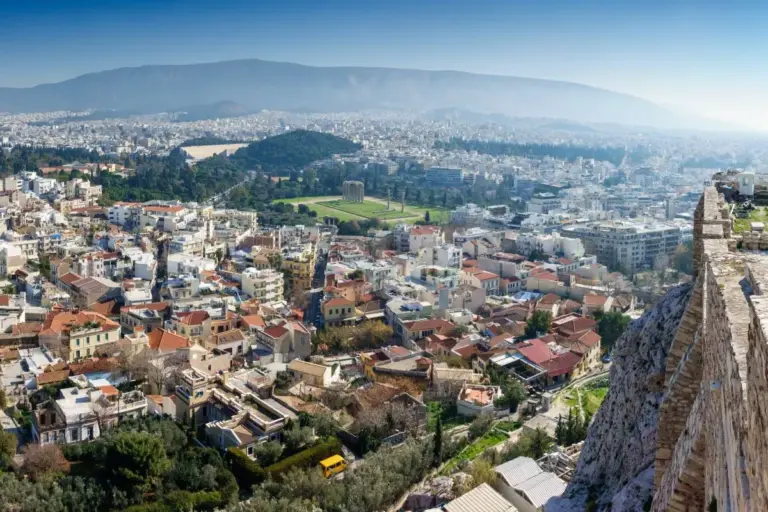
Athens is the largest and most liquid market in the country, as well as being the most expensive. According to data from the Bank of Greece, apartment prices in the city increased by 6.6% year on year in the third quarter of 2025, following an 8.4% increase across 2024. According to the revised series, Attica as a whole grew by 8.5% in 2024. The citywide indicative average, according to Spitogatos asking-price data, sits in the range of 2,450 to 2,580 euros per square metre, but this average is almost meaningless without geographic context. Prices in outer districts can be found below 1,500 euros per square metre. Established central neighbourhoods reach 7,000 euros per square metre. New luxury developments in Glyfada, Voula and parts of the city centre exceed 10,000 euros per square metre.
Even at these levels, buying property in Athens remains substantially cheaper than in most other western European capitals of a similar size and with a comparable quality of life.
For a detailed neighbourhood breakdown and legal specifics, see our guide to buying property in Athens.
Thessaloniki
Thessaloniki has been the fastest-growing major urban market in the country for the past two years. According to data from the Bank of Greece, year-on-year apartment price growth was 9.6% in the third quarter of 2025, with the revised figure for 2024 at 11.7%. Averages range from approximately 2,000 to 2,600 euros per square metre, depending on the district; the historic centre and the waterfront are at the upper end of this range. Thessaloniki still trades at a significant discount to Athens. This combination of lower initial costs and higher recent growth has placed it on the radar of international buyers, who would previously have focused solely on Athens.
Other Cities
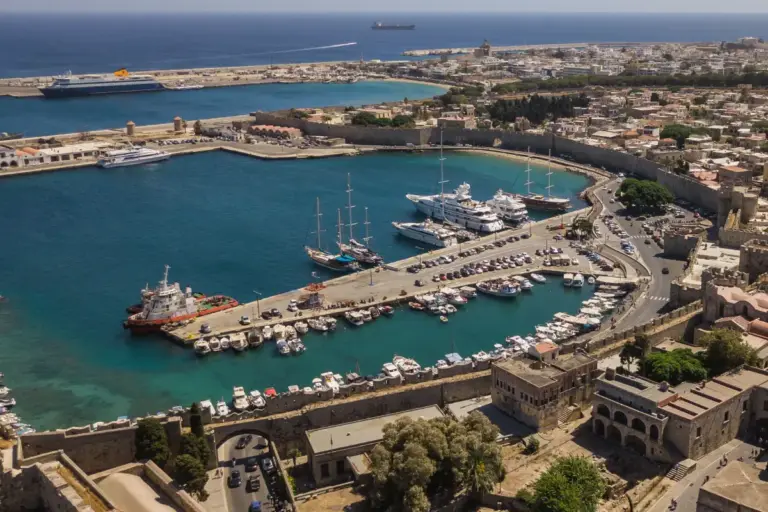
In the third quarter of 2025, the Bank of Greece category covering urban areas outside Athens and Thessaloniki recorded year-on-year growth of 8.9%, with growth in 2024 revised down from 8.0% to 7.5%. This grouping includes the cities of Patras, Larissa, Heraklion and Rhodes, among others. Prices are generally lower than in Athens and Thessaloniki, but there is significant variation between cities and within each city. As the category is too heterogeneous to summarise with a single average, buyers should consult local sources for information on specific cities.
Islands and Rural Greece
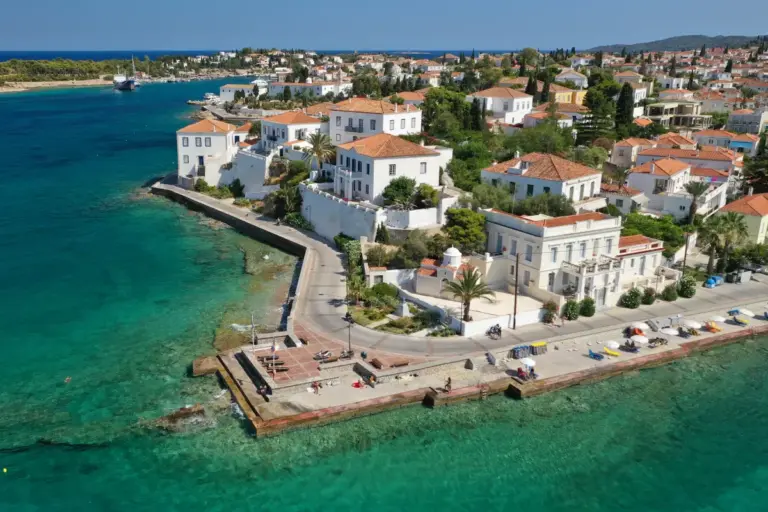
In the third quarter of 2025, the Bank of Greece’s ‘rest of Greece’ category, which covers everything outside the main urban centres, grew by 8.5% year on year, with the revised figure for 2024 at 10.9%. However, this headline figure masks a wide range. Rural plots in the interior can be purchased for under 1,000 euros per square metre. Meanwhile, the most sought-after locations in the premium Cyclades and on islands such as Mykonos and Santorini exceed 10,000 euros per square metre.
Islands with direct international flight connections, including the most popular island destinations for property buyers, have meaningfully outperformed the regional average. According to Indomio, asking prices in Rhodes increased by 22.4% year on year in January 2026 — far exceeding the Bank of Greece’s transaction-based figure for the rest of Greece. Crete, Corfu, Santorini and Mykonos have all experienced significant growth due to foreign demand for holiday homes and rental properties.
For a breakdown of the legal and market specifics of the most popular island destinations, see our guide to the best Greek islands for property buyers.
What Is Driving Greek Property Prices? The Key Forces
Every market price chart is driven by a set of forces that explain why the numbers are moving. In Greece, it is these four forces that are doing most of the work, so it is more useful to understand them than to track the headline growth rate.
Supply is structurally constrained. In December 2024, the Greek Council of State ruled that the volumetric bonuses introduced by the New Building Regulation were unconstitutional. This effectively froze a significant proportion of the new-build pipeline until 2025 while the necessary legislative changes were being made. This sits on top of a long-running deficit: Athens alone is estimated to require around 35,000 new housing units per year, yet the number of issued permits has remained well below this level. The Bank of Greece has explicitly warned that the slowdown in construction is delaying the recovery of supply further. Furthermore, short-term rental platforms have absorbed a significant proportion of urban and island properties that would otherwise be available to long-term residents or buyers, thereby exacerbating the shortage in the standard housing market.
External demand remains strong. Foreign buyers account for around 40% of transactions in prime districts of Athens and premium island markets. According to government figures, the Greek Golden Visa programme has channelled approximately 5.54 billion euros into the property market over the past decade. Tourism continues at record levels, with around 37 million visitors in 2025 generating revenues above €23 billion, which supports demand for rental-yield property in tourist zones. The 7% flat-rate tax regime for foreign pensioners (Greek Law 4172/2013, as amended) and the digital nomad visa scheme generate additional demand from higher-end European labour market participants.
Macroeconomic conditions are supportive. According to projections by the European Commission and the Bank of Greece, Greek GDP is expected to grow by between 2.1% and 2.2% in 2025 and 2026, which is ahead of the euro area average. Unemployment fell to 8.6% in October 2025, down from over 25% a decade earlier. Greece regained investment grade with all the major rating agencies in 2023, which lowered sovereign borrowing costs and changed the way the country is viewed by foreign investors.
Growth is moderating, and that matters. It has slowed from 13.9% in 2023 to 9.1% in 2024 and to 7.7% in Q3 of 2025. The 2026 forecast range of 4% to 7% would continue this trend. This is normalisation, not reversal, but it is worth noting that the Greek Court of Audit has highlighted a growing disparity between property prices and local incomes, describing it as an increasing affordability issue for Greek households. While this gap does not constitute a forecasting model, it is the kind of pressure that eventually feeds into policy and demand.
Is Now a Good Time to Buy? An Honest Assessment
This is the question that every buyer implicitly asks, but almost no market article provides a useful answer. The answer is neither promotional nor evasive. It is contextual.
Prices are rising, but the rate of growth is moderating. There is no sign of an imminent reversal in the macro indicators, such as an evident speculative bubble or collapse in structural demand. The market is normalising after several years of exceptional growth — it is not breaking down.
However, the data cannot tell us whether the next two years will resemble the last two. The expected moderation could be sharper if the wider European backdrop changes, particularly if interest rates remain high for longer or if the eurozone economy weakens. The minimum investment thresholds for the Golden Visa were increased in 2024, and further policy changes are possible. A buyer with a three- to five-year timeframe and an expectation of a quick resale has a meaningfully different risk profile to someone buying for personal use over ten years or more.
For a foreign buyer, the timing question depends more on the purpose of the purchase than on the state of the market. A buyer acquiring a holiday home or primary residence with no fixed exit strategy is less exposed to timing issues than a buyer acquiring property for capital appreciation. A buyer focused on rental yield should evaluate net yield after taxes, management costs and ENFIA rather than price trends. A buyer betting on short-term capital gain should pay the most attention to timing, and this profile is least suited to Greece.
A note on past returns: According to Bank of Greece index data, the Greek market has grown by roughly 86% since 2017. A buyer who entered the market in 2017 has done very well. However, a buyer entering the market today should not expect the same percentage return over the next eight years, even if the market continues to grow. Compounding from a higher base produces smaller percentage gains, even when the absolute trend is the same.
How Greek House Prices Compare to the Rest of Europe
For most foreign buyers, Greek property prices only make sense in the context of their home market. At 2,100–2,500 euros per square metre, the national average sits well below that of most other western European markets with a comparable climate, infrastructure and quality of life.
Compared with major British markets, according to UK Land Registry data for 2025, London transaction prices are typically two to four times the Greek national average, depending on the borough. Even regional centres such as Manchester and Bristol exceed Greek prices on a per-square-metre basis.
Compared with the main competing Mediterranean second-home markets, prices in Spain’s Costa del Sol and Portugal’s Algarve have caught up with or, in the most sought-after locations, overtaken Greek prices over the past five years, according to data from Idealista and Confidencial Imobiliário. The Greek property market is no longer the obvious bargain it was between 2015 and 2018. While it remains competitive, its position has shifted from ‘cheap Mediterranean’ to ‘competitively priced Mediterranean’.
However, there is a trap in this kind of comparison. A buyer expecting prices similar to those in 2015 will be disappointed; those prices are gone. However, a buyer comparing today’s Greek prices to those in Spain, Portugal, southern Italy or Croatia will still generally find that Greece offers value. That said, the size of the advantage is smaller than it was and varies sharply by location within Greece itself.
Rental Yields in Greece: What the Numbers Say
Rental yield and price growth are separate issues, and rental yield is the relevant factor for buyers considering the property as an investment rather than a place to live. The figures provided here are for guidance only. The net yield for a given property depends on its location, management arrangement and the owner’s tax position.
According to data from the Bank of Greece, Spitogatos and major brokerages such as Astons, gross long-term rental yields nationally range from 4% to 5%. Thessaloniki and other university cities tend to be at the upper end of this range due to sustained demand from students and workers. In Athens, yields vary sharply by district. The highest gross yields are generally found in middle-tier neighbourhoods rather than the most expensive ones, where the price per square metre exceeds the achievable rent.
Gross yields on short-term rentals can be significantly higher, particularly in tourist zones during peak season. Well-positioned coastal and island properties can achieve indicative gross yields of 7% to 10% on an annual basis, but the gap between gross and net yields is wider than for long-term rentals. Platform fees, management costs, periods of low or no occupancy outside peak season and a tightening regulatory environment all reduce the net figure. The short-term rental market is also subject to new licensing requirements and area-specific restrictions that vary by municipality and are still evolving.
The Greek mortgage market is unusually small. According to Bank of Greece data, outstanding residential mortgages stood at 11.1% of GDP at the end of 2024, down from a peak of 40.1% in 2012. Most transactions, particularly those involving foreign buyers, are completed in cash. Mortgages for non-residents are available, but on more restrictive terms than those offered to Greek residents. Typically, they require 30% to 40% equity and are offered at higher rates. The light use of leverage in the market is one reason why it has remained more stable than markets where demand is fuelled by easy credit.
The difference between gross and net yield in Greece is often greater than buyers anticipate when modelling a specific purchase. One component is annual property tax (ENFIA). It is worth understanding what the full picture of annual ENFIA obligations looks like for a specific property type and location before the gross yield figures start to drive decisions.
Frequently Asked Questions
The Greek property market has decisively moved out of its post-crisis phase and into a period of sustained, albeit increasingly uneven, growth. Prices have risen significantly across much of the country in recent years, due to limited housing supply, foreign demand, tourism and renewed investor confidence. However, the pace of growth is beginning to moderate, and it is important to understand the difference between headline asking prices and actual transaction values.
The following questions address the issues that buyers and investors commonly ask. They also clarify the practical difference between asking and sale prices, which is one of the most misunderstood aspects of the Greek property market.
What is the average house price in Greece?
According to data from the Bank of Greece and Spitogatos from late 2025, the national average for residential properties is around 2,100 to 2,500 euros per square metre. However, a national average is of limited practical use due to the wide regional variation: rural plots can be purchased for under 1,000 euros per square metre, while premium locations in central Athens and on the most sought-after Cycladic islands exceed 10,000 euros per square metre. The Bank of Greece figure is based on actual sales prices, whereas Spitogatos data reflects asking prices, which are generally higher than actual sales prices.
Where are property prices rising fastest in Greece?
According to transaction data from the Bank of Greece for the third quarter of 2025, Thessaloniki led the major urban markets with year-on-year growth of 9.6%. Other cities recorded growth of 8.9%, the rest of Greece 8.5%, and Athens 6.6%. The apparent paradox is that, as Athens started from much higher absolute prices, a smaller percentage gain represents a larger absolute movement. According to Indomio’s asking-price data, individual islands have seen more significant movements, with Rhodes up 22.4% year on year in January 2026. However, past growth is not an indicator of future performance: the cities and islands that have seen the most significant growth are also the ones where affordability is now the most pressing issue.
Are Greek property prices expensive compared to other European countries?
Although Greek property prices remain well below the average for western Europe, they are no longer the bargain they were five to ten years ago. The Greek national average of €2,100 to €2,500 per square metre is significantly lower than the figures seen in major German and northern Italian cities, which are above €5,000, and in central Rome, which are between €3,000 and €4,000. Within Greece, prices vary significantly: Mykonos and Santorini are among the most expensive locations in Europe, while rural plots in the countryside are among the cheapest in the European Union. Prices in the most sought-after areas of the Costa del Sol in Spain and the Algarve in Portugal have caught up with those in Greece, so the cost advantage of buying a second home in Greece between 2015 and 2018 has decreased but not disappeared.
Will house prices in Greece go up in 2026?
Forecasts indicate continued growth in 2026, albeit at a more moderate rate than in recent years. The European Banking Authority projects a 4.4% increase in Greek residential property prices in 2026, with broader market forecasts ranging from 4% to 7%. Supporting factors include structurally limited new-build supply, sustained foreign demand and continued strength in the tourism sector. However, risks include a sharper European macroeconomic slowdown, further changes to the Golden Visa programme and the ongoing uncertainty surrounding building permits following the Council of State’s December 2024 ruling. It should be noted that market forecasts are inherently uncertain, and these projections are a baseline view rather than a guarantee.
What is the difference between asking price and transaction price in Greece?
Asking prices published on portals such as Spitogatos and Indomio are the prices at which sellers are advertising their properties. Transaction prices, as reported by the Bank of Greece, are the actual prices paid by buyers, derived from bank valuations of completed deals. In less liquid markets where there is room to negotiate, asking prices tend to sit above transaction prices, and the gap can be significant. For tracking the market as a whole, Bank of Greece data is a more reliable reference point. When it comes to pricing a specific property, the asking price is merely a starting point for negotiation.
What the Market Data Means for Your Purchase
Understanding where prices are and where they are heading is useful context. Knowing whether a specific property is fairly priced, whether its title is clean, and whether the purchase structure suits your goals is a different question entirely, and one that depends on the specific circumstances of the property and the buyer.
If you are at the stage of moving from market research to an actual purchase, an In-Depth Property Consultation is the right next step. It gives you a structured legal assessment of your situation before you commit to anything, covering the property, the zone, the costs, and any issues specific to your case.