
Rhodes is one of the most accessible property markets in Greece for international buyers. Close to 3 million international visitors arrived at Diagoras Airport in the first half of 2025 alone, making it one of the busiest gateways in the Aegean. The island has a functioning year-round town (Rhodes Town, population approximately 50,000), as well as hospitals, banks and an international airport with direct flights from the UK (London, Manchester and Birmingham, among others) from March to November. There are also ferry connections to Athens and the wider Dodecanese.
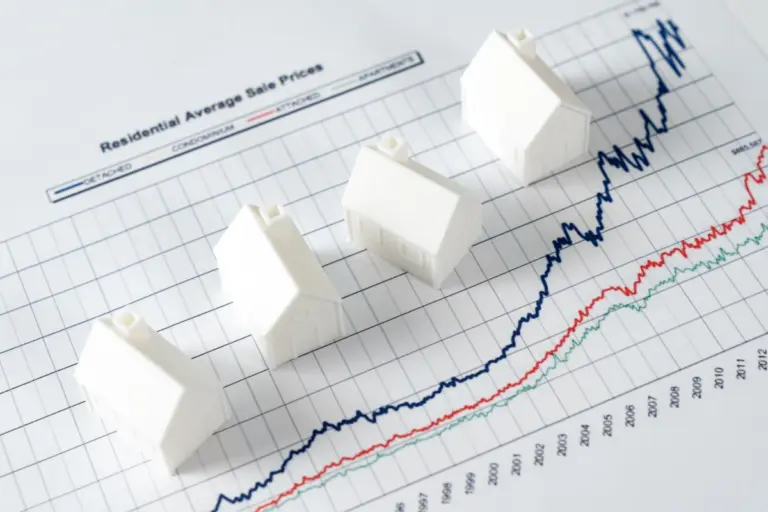
Prices remain competitive compared to those on the premium Cycladic islands. In January 2026, the average asking price across Rhodes was approximately €2,420 per square metre (source: Indomio), representing year-on-year growth of 22.4%. While this growth rate is significant, the base price remains well below that of Mykonos (€7,000+ per square metre), Santorini (€5,000+ per square metre) and even Chania, the most expensive province in Crete (€2,900 per square metre). For buyers considering options in the Mediterranean, Rhodes offers infrastructure and tourist demand comparable to those of the Spanish Costa del Sol or Portugal’s Algarve, but at a lower cost per square metre, with a longer tourist season than many competing destinations (March to November).
Rhodes is also large. At approximately 1,400 square kilometres, it is one of the largest Greek islands. The price, character and legal profile vary substantially between different parts of the island. The north is tourist-intensive with developed infrastructure, while the south is rural, quiet and significantly cheaper. Prospective buyers need to understand this geography before looking at listings.
Where to buy in Rhodes: areas and what they offer
Rhodes does not have one market. The difference between buying in Rhodes Town and in the southern village of Gennadi, for example, is comparable to the difference between buying in central London and in rural Cornwall. Each area has its own price level, buyer profile and practical considerations.
Rhodes Town and the Old Town
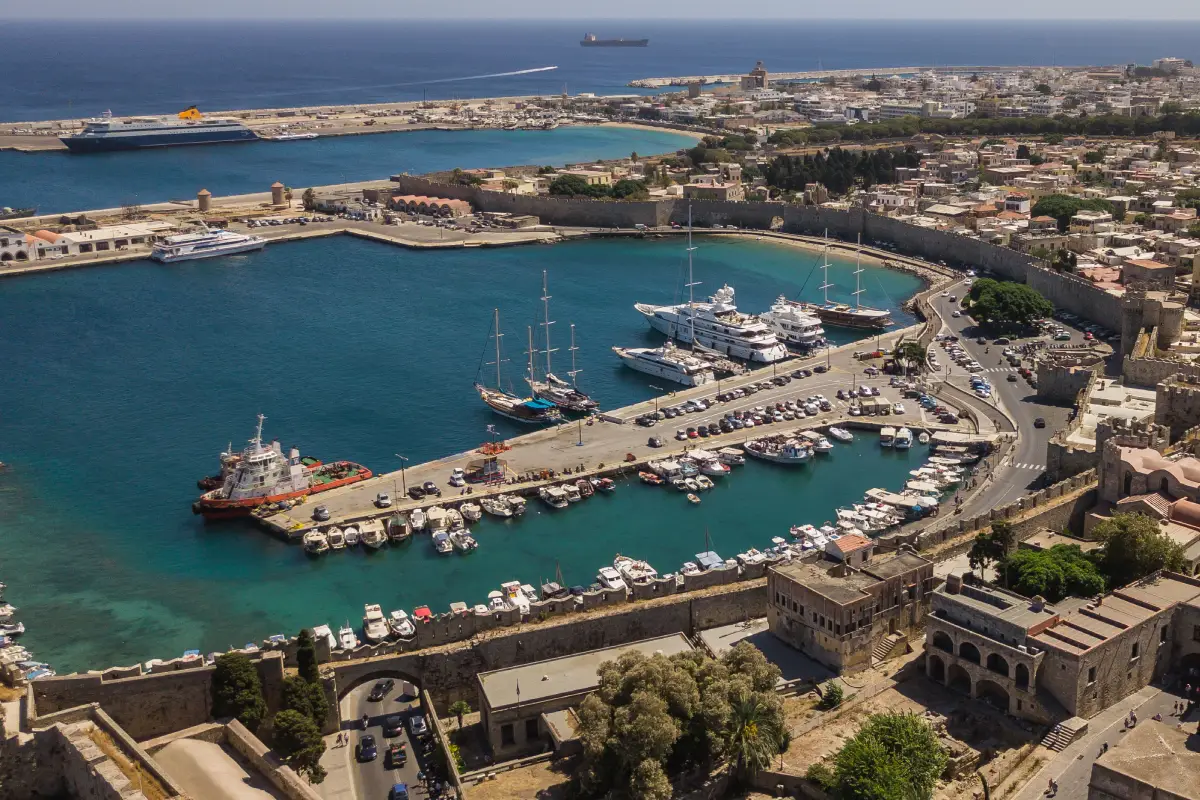
Rhodes Town is the island’s administrative and commercial centre, functioning year-round. The Old Town is a UNESCO World Heritage Site, which has legal implications for property buyers. Any renovation, structural modification or change to the external appearance of a building within the UNESCO zone requires approval from the heritage authority. These approvals can be restrictive and time-consuming. Properties in the Old Town often have complicated ownership histories, some of which date back to the period of Italian administration (1912–1947), with cadastral records predating the modern Greek system.
The Old Town is ideal for buyers with a genuine interest in historical architecture and the patience to navigate a more complex legal process. It is not well suited to those seeking straightforward renovation projects or short-term rental optimisation. Prices in the Old Town vary widely depending on the property’s condition and its location within the walls, but those with resolved titles and high quality command premium prices.
Ialyssos and Ixia
The north-west coast is the closest to the airport. Ialyssos and Ixia offer a mix of modern apartments and small villas, as well as some older properties that would be ideal for renovation. This area is popular with northern European buyers thanks to its logistical convenience, including its proximity to the airport (10 minutes), good road connections to Rhodes Town and a range of restaurants and amenities that are open outside of the peak tourist season. Prices are mid-range for the island. This is an ideal location for buyers looking for a practical holiday home in a functioning neighbourhood rather than a resort enclave.
Faliraki
Faliraki is the island’s main tourist destination, centred on its long, sandy beach. The area has well-developed tourist infrastructure and high demand for short-term rental accommodation during the season. For buyers whose main goal is to generate rental income from tourism, Faliraki offers the greatest potential for bookings. Competition among rental properties is consequently intense. Prices are in the island’s mid-range. The buyer profile here is predominantly investment-focused, targeting seasonal rental yield.
Kallithea and Afandou
The eastern coast is more residential in character and quieter. Kallithea and Afandou are popular with buyers looking for a property for their own use, particularly for long stays or semi-retirement. Afandou has a golf course, which attracts a specific clientele. Prices are generally below the island average, making these areas accessible to those on entry-level budgets. The lower price point does not indicate a lower quality location: both areas have good beaches and are within easy reach of Rhodes Town.
Lindos and the eastern coast
Lindos is the premier destination on Rhodes. Its distinctive character, created by its whitewashed architecture, elevated acropolis and small bay, commands a significant price premium. Demand for short-term rentals of quality properties in Lindos is very high, particularly in the upscale segment. However, building restrictions in Lindos are severe as the village is protected as a traditional settlement. Any external modifications, new constructions or significant renovations require specific approval from the heritage authority. Therefore, not everything listed for sale in Lindos can be modified at will. Prospective buyers should verify the scope of any renovations before committing to a purchase.
The broader eastern coast south of Lindos offers lower prices, but has less developed infrastructure and a shorter tourist season.
South Rhodes (Gennadi, Lachania, Plimiri, Prasonisi)
The south of the island is the least developed and most affordable area. Prices can be 40–50% below the island average. Properties tend to be older and often require renovation, and the market is significantly less liquid than in the north. There is less infrastructure: fewer restaurants, shops and services operate outside peak season. Prasonisi, located at the southernmost tip of the island, is renowned for windsurfing and caters to a specific tourist demographic. The south is ideal for buyers on a limited budget or looking for a long-term renovation project, and for those who value space and tranquillity over convenience and quick resale.
Property prices in Rhodes: what to expect
According to Indomio data, the average asking price across the municipality of Rhodes was approximately €2,420 per square metre in January 2026, representing year-on-year growth of 22.4%. This growth rate places Rhodes among the fastest-appreciating island markets in Greece. However, the island average conceals significant variations by area and property type.
A small house measuring 60–80 square metres in a mid-range area such as Ialyssos, Kallithea or Afandou costs around €150,000–€220,000. An apartment of 90–100 square metres in a tourist area such as Faliraki or Ixia costs around €225,000–€350,000. A villa with a pool in a premium location (e.g. Lindos or elevated sites with sea views on the eastern coast) can cost anything from €500,000 to several million euros. In the south of the island, properties requiring renovation can be found for between €60,000 and €120,000. However, the market is less liquid here, and resale timelines are longer.
Beyond the purchase price, budget for transaction costs of approximately 8 to 10%, including transfer tax (3.09%), notary fees, land registry fees and legal fees. If an agent’s commission applies to the buyer (typically 2–3%), add this to the total.
Legal specifics for buying in Rhodes: the Dodecanese cadastre
Rhodes is located in the Dodecanese, a region with a unique legal landscape that is important to understand before engaging with the property market. Three areas in particular require attention: the island’s cadastral history; the building restrictions that apply in protected zones; and the prevalence of historical building violations. While none of these factors make buying in Rhodes more difficult than elsewhere in Greece, each one requires verification steps that do not apply to the same degree on the mainland or on other islands.
The Dodecanese cadastral history
The Dodecanese Islands, of which Rhodes is the largest, were under Italian administration from 1912 to 1947. During this period, Italy introduced its own cadastral system, which differs from the system used on the Greek mainland and most other Greek islands. Following the islands’ reunification with Greece in 1947, the integration of Italian-era records into the Greek system began. However, in some areas of Rhodes, this process remains incomplete.
The practical consequence for buyers is that some properties on Rhodes have title records originating from the Italian administrative period. The chain of ownership may need to be traced through documents from different eras and administrative systems. Therefore, a lawyer conducting title verification on a property in Rhodes must be familiar with both the Italian and Greek cadastral systems. A title search approach designed for mainland Greece may not suffice.
Additionally, the transition from the old mortgage registry system (Ypothikofilakeio) to the modern national cadastre (Ktimatologio) is ongoing in some areas of Rhodes. For certain properties, a standard Ktimatologio search may not be possible, in which case title verification must be conducted through local registry records.
Building restrictions in protected zones
A significant proportion of Rhodes’ territory is subject to building restrictions. The Old Town of Rhodes, a UNESCO World Heritage Site, has strict controls on renovation and new construction. Lindos is also protected as a traditional settlement, and there are equally stringent rules on external modifications there. Coastal zones are subject to setback restrictions, which limit construction within a certain distance of the shore. Some parts of the island’s interior have been designated as Natura 2000 protected areas, where construction is severely restricted or prohibited.
These restrictions directly affect what you can do with a property after purchase. For example, a villa listed as having renovation potential may, in practice, be subject to constraints that make significant renovation impossible or require years of approvals. It is essential to verify the planning and heritage classification of a property before purchasing it.
Building violations: a national issue with island-specific frequency
Illegal building is a nationwide problem in Greece, but it is statistically more prevalent on the islands, where the pressure to build for tourists has historically outpaced enforcement. Although successive Greek legalisation laws have permitted the regularisation of certain violations, the status of each property must be verified on a case-by-case basis. A property that appears finished and occupied may have unresolved building violations that prevent legal transfer. This is one of the most common risks buyers encounter in Greece and is among the first things a title check addresses.
Holiday home or investment? Two buyer profiles for Rhodes
Not everyone buying in Rhodes has the same reasons for doing so, and this distinction is important. The location, price, due diligence priorities and ongoing management requirements are all shaped by your intended use of the property.
Holiday home buyer
This buyer is purchasing the property for personal use, typically for several weeks per year. They may rent it out during vacant periods, but this is not their main priority. Their priorities are a location they already know and enjoy as tourists, a property suited to their family’s needs, ease of management from abroad (proximity to a local management agency) and contained annual ownership costs.
This profile’s typical budget is €150,000–€350,000. The most suitable areas are Ialyssos, Kallithea, Afandou and the north-west coast, which offer practical access, functioning services and a residential character. Direct flights from the UK to Rhodes operate seasonally from March to November, with year-round connections via Athens.
Managing a holiday home remotely requires a local contact, such as a property management agency or an individual who can handle cleaning, check-ins (if you are renting out the property), garden maintenance and minor repairs. This is a recurring cost that should be budgeted for from the outset.
Rental income investor
This buyer is primarily looking to generate income from tourist rentals. Their priorities are a location with high tourist demand and footfall, the ability to register for short-term rentals, and a realistic yield projection that takes seasonality into account.
While Rhodes has a long tourist season (March to November), it is not a year-round rental market like Athens. Yield projections must therefore be based on seven to eight months of the rental season, rather than twelve. Demand is very low in the off-season months. Competition from established hotels and existing licensed rental properties is significant in the most popular areas.
The net rental yield, once property management, maintenance, vacancy costs, ENFIA (annual property tax) and income tax on rental income have been deducted, is meaningfully lower than the gross yield. If you are making investment projections, use net figures, not gross. Properties acquired through the Golden Visa programme cannot be used for short-term rentals, so if your objective is to earn income from Airbnb, the Golden Visa is not the right structure for you.
The best areas for rental income are Faliraki (high volume), Lindos (premium segment) and Ialyssos/Ixia (mid-range and affordable).
Golden Visa and Rhodes: what the threshold means in practice
With a population exceeding 3,100, Rhodes falls under the €800,000 Golden Visa investment threshold for standard residential properties. It is in the same tier as Athens, Thessaloniki, Crete, Mykonos and Santorini. The €250,000 threshold only applies to commercial-to-residential conversion projects. The €400,000 threshold applies to regions that are not classified as high-demand areas.
The Golden Visa scheme grants a five-year renewable residence permit, covering the investor and their family members, and allows them to travel within the Schengen area. There is no minimum stay requirement. Citizenship requires seven years of actual residence in Greece.
There are two constraints that are important for buyers in Rhodes: properties acquired through the Golden Visa programme cannot be used for short-term rental (this is a programme requirement, not a local regulation), and the investment must be in a single property with a minimum area of 120 square metres. Zone classifications and thresholds are set by ministerial decree and are subject to change. Verify the current thresholds with your lawyer before committing.
Practical steps to buying in Rhodes as a foreign buyer
The property market in Rhodes is most active during the tourist season, so the best properties in popular areas tend to be snapped up quickly once they are listed. Having your Greek tax number (AFM), bank account and legal representation in place before you start viewing is not just an administrative formality; it makes the practical difference between being able to move and not being able to. Given the above-described cadastral specifics, the property lawyer you appoint should have experience specifically in the Dodecanese.
Buying remotely is entirely feasible. With a power of attorney, a lawyer experienced in the Dodecanese can handle every step on your behalf, including tax registration, coordinating your bank account, conducting due diligence, reviewing and signing contracts, and representing you at the notarial deed. The power of attorney must be notarised and apostilled. Many international buyers complete their purchase in Rhodes without travelling to the island for any legal steps.
If you plan to use the property as a holiday home and rent it out when you are not there, it is a practical necessity to arrange local management. Rhodes has well-established property management services that cover cleaning, guest check-in, maintenance and emergency response. Budget for this as a recurring annual cost from the outset. Rental income, even from short periods, creates declaration obligations in Greece and, depending on your country of residence, potentially at home as well. A legal and tax review should resolve exactly what those obligations look like in practice before the first booking, not after it.
Rhodes is not classified as a military border zone for property purchase purposes. Non-EU citizens, including those from the UK, USA, Canada, and Australia, can purchase property freely without the ministerial authorisation required in some other parts of Greece.
Frequently asked questions
Rhodes attracts a different type of buyer to Athens or the Cyclades. The market is driven less by speculation and more by the demand for practical second homes, seasonal rentals and properties offering a balance between tourism infrastructure and everyday liveability. The island offers a wide range of prices, good international connections, and a longer operating season than many competing Mediterranean destinations.
Can foreigners buy property in Rhodes?
Yes, there are no restrictions. EU citizens can purchase property on the same terms as Greek nationals. Non-EU citizens can also purchase property freely on Rhodes, since the island is not classified as a military border zone (unlike some other Greek islands and border regions). The standard requirements are a Greek tax number (AFM) and, usually, a Greek bank account. Buying property and applying for the Golden Visa are two separate processes, and you can purchase property without applying for residency.
How much does property cost in Rhodes?
In January 2026, the average asking price was approximately €2,420 per square metre (Indomio), representing a year-on-year growth of 22.4%. In practical terms, a small house (60–80 sq m) in a mid-range area costs around €150,000–€220,000. An apartment measuring 90–100 sqm in a tourist area would cost around €225,000–€350,000. Villas with a pool start from €500,000. Budget an additional 8–10% for transaction costs.
Is Rhodes a good place to buy a holiday home?
Yes, for buyers who already know and enjoy the island. Rhodes offers a well-established tourist infrastructure, a long season (March to November), direct seasonal flights from many European cities, and a thriving town centre that remains active all year round. Prices here are also more competitive than in the Cyclades. However, there are a few things to consider: the management costs of a property that you only use part of the year, Dodecanese-specific cadastral due diligence, and the seasonality of any rental income. None of these are insurmountable, but they require planning.
What are the best areas to buy in Rhodes?
It depends on your objective. For a holiday home with practical access, Ialyssos, Kallithea or Afandou are the strongest options. For rental yield from tourism, Faliraki offers high volume while Lindos targets the premium segment. For budget purchases or renovation projects, the south of the island (Gennadi, Lachania) offers significantly lower entry prices. Rhodes Old Town has historical character, but comes with complex legal considerations. The right area depends on your specific priorities, not an abstract ranking.
What is the Golden Visa threshold for Rhodes?
With over 3,100 residents, Rhodes falls under the €800,000 threshold for standard residential property. The €250,000 threshold only applies to commercial-to-residential conversion projects. The €400,000 threshold applies to regions that are not classified as high-demand areas. Do not rely on generic claims of a ‘€250,000 Golden Visa in Rhodes’; this is only accurate for specific conversion projects. These thresholds are set by ministerial decree and are subject to change.
What are the risks of buying property in Rhodes?
Specific risks in Rhodes include the Dodecanese’s cadastral history, where title records may originate from the Italian administrative period (1912–1947) and require specialised knowledge to verify. Other risks include building restrictions in UNESCO, traditional settlement and coastal zones, which limit the scope of renovations; building violations, which are statistically more prevalent on islands than in cities; and the seasonal nature of the rental market. While none of these risks are insurmountable with proper due diligence, they do require the expertise of a lawyer who specialises in the Dodecanese.
Coming prepared makes the difference
Rhodes rewards buyers who come prepared. The market is active, the legal specifics of the Dodecanese are complex, and the due diligence process for coastal and historically significant properties involves details that are not visible in listings.
When you are ready to assess a specific property or have questions about the Dodecanese cadastre, that is the point to consider a legal consultation. If you’re comparing options or ready to evaluate a specific property, the best place to start is with representation that has experience in this market. As the HereGreece! team is based in Thessaloniki, the Dodecanese is familiar territory for us, not a distant jurisdiction.