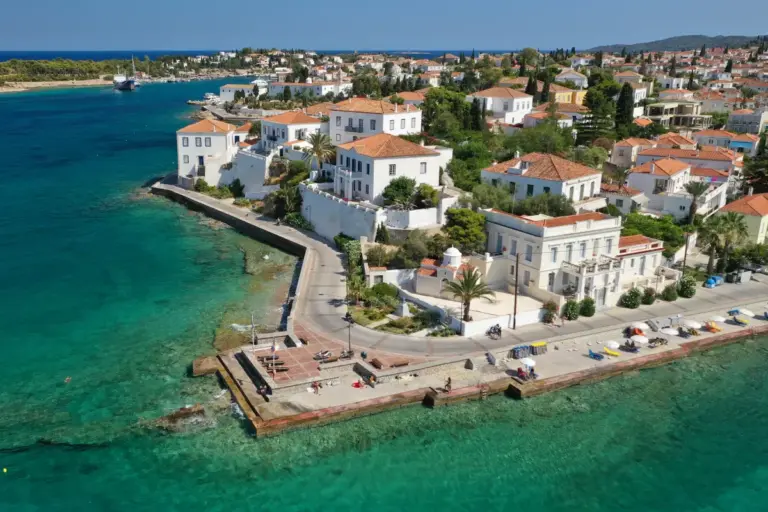


The Greek Golden Visa is the only residency programme in Europe that allows a non-EU national to live, work, and travel across the Schengen Area without any minimum time spent in the country, obtained through a single real estate purchase. It has survived the policy reversals that ended or restricted the equivalent programmes in Portugal, Ireland, and Spain.
In 2026 the programme still exists, but the investment thresholds are higher, the property requirements are more specific, and the procedural details require more careful management than they did before 2024. What follows is a current account of how it actually works.
What is the Golden Visa in Greece
The Greek Golden Visa is a residence permit granted to non-EU nationals who make a qualifying investment in Greece, most commonly in the form of real estate. Initially valid for five years, it can be renewed as long as the investment is maintained, in accordance with the Greek Immigration Code (Law 5038/2023, Article 100).
The visa remains popular because it combines Greek residency with Schengen travel benefits and family reunification options, while not requiring the investor to live in Greece full time.
Unlike some countries, which have restricted or removed the real estate route due to housing and policy pressures (Portugal is a well-known example), Greece has kept it.
New developments regarding the Golden Visa in Greece from 2026
In order to understand how the Greek Golden Visa will operate in 2026, it is important to distinguish between the reforms introduced and consolidated in 2024 and 2025, and the procedural and regulatory developments expected to influence the programme in the future.
Changes introduced in 2024 and applied through 2025
The current rules are the result of significant reforms implemented through amendments to the Greek Migration Code. These reforms established a differentiated investment framework based on property location and type.
- Increased minimum investment thresholds
The programme now applies different minimum investment amounts depending on the location of the property. A higher threshold applies to areas with strong demand, while a lower threshold applies to the rest of the country. - Geographical differentiation of investment areas
The higher investment threshold applies to the Region of Attica, the regional unit of Thessaloniki, Mykonos, Santorini, and islands with a population exceeding 3,100 inhabitants. All other areas fall under the lower threshold. - Single-property requirement and minimum surface
Investments under the standard real estate route must concern a single property with a minimum surface area requirement, limiting the possibility of combining multiple smaller units to reach the threshold. - Special real estate categories with lower thresholds
A reduced investment amount remains available for specific cases, such as the conversion of commercial properties into residential use or investments in listed or protected buildings, subject to strict documentation and completion requirements. - Restrictions on short-term rentals
Properties acquired under the Golden Visa programme are subject to restrictions on short-term leasing, and compliance with these rules is linked to the renewal of the residence permit.
These measures form the legal baseline that will apply to Golden Visa applications from 2026 onwards.
Developments affecting the Golden Visa from 2026
While no fundamental restructuring of the real estate route has been announced for 2026, the focus is shifting towards procedural adjustments, clarifying implementation and exploring complementary investment routes, rather than increasing investment thresholds further.
One of the key developments concerns how residence permits are calculated. The Greek authorities have announced their intention to address the practice of backdating residence permits to the application date. This would mean that the five-year validity period would start from the actual date of issuance of the permit rather than the filing date. This measure has been publicly discussed since early 2026 and is expected to be formalised, but applicants should verify the applicable rule at the time of submission.
Another relevant development is the expansion of alternative investment options alongside real estate. Alongside the property-based Golden Visa, Greece has introduced additional residence routes linked to investments in innovative sectors, such as start-up companies registered under national innovation frameworks. While these options do not replace the real estate option, they reflect a broader policy direction aimed at diversifying foreign investment.
From a practical perspective, 2026 is also expected to bring greater standardisation of documentation and administrative practice, following the clarifications introduced through ministerial decisions at the end of 2025. These changes will affect how supporting documents are assessed, how special property categories are verified and how compliance is monitored over time.
For applicants considering the programme in 2026, the core structure of the Golden Visa will remain stable, but they must pay careful attention to procedural details, timing, and the specific category under which their investment falls.
Property requirements for obtaining the Golden Visa
To obtain the Greek Golden Visa through real estate, you must comply with specific property-related criteria. These criteria depend on the location of the property and the investment route used.
Foreign investors can obtain the Golden Visa by purchasing residential real estate, such as a house or flat, or, in certain cases, by investing in specific real estate projects recognised by law. Building land that is not already being used for residential purposes does not qualify under the standard property route, unless it is part of an approved development that meets the legal criteria.
The minimum investment amount required varies depending on the location of the property. Higher thresholds apply in areas of high demand, while lower thresholds apply elsewhere in the country. The investment value is assessed based on the purchase price stated in the notarial deed and must meet the applicable minimum at the time of signing. Ancillary costs, such as taxes, notary fees and legal expenses, do not count towards the minimum investment threshold.
Under the standard Golden Visa real estate routes, which are subject to higher and lower thresholds, the investment must concern a single property that meets the minimum value and surface area requirements. Combining multiple properties to reach the threshold is generally not permitted.
However, an exception applies to specific reduced-threshold routes, such as the conversion of commercial properties for residential use or investments in listed or protected buildings, where different rules may apply. These cases are subject to strict documentation and completion conditions and require careful legal assessment.
Advantages of the Greek Golden Visa for non-EU citizens
The Greek Golden Visa offers non-EU nationals a number of practical and strategic advantages relating to residence rights, mobility and long-term planning.
The Golden Visa grants a renewable residence permit allowing non-EU nationals to live legally in Greece without any minimum stay requirement. Permit holders travel freely within the Schengen Area for short stays, and immediate family members can be included in the same application, covering spouses and dependent relatives. The permit is renewable as long as the investment is maintained, providing predictability for long-term planning. Unlike citizenship, which requires seven years of effective residency and Greek language requirements, the Golden Visa does not commit the holder to living in Greece. It can form part of a longer-term residence strategy, but it does not automatically lead to citizenship, and this distinction should be clear before any investment decision is made.
These advantages make the Greek Golden Visa an attractive option for non-EU citizens looking to obtain European residency through a structured, property-based investment scheme.
Procedure for applying for a Golden Visa in Greece in 2026
Obtaining the Greek Golden Visa through property investment involves a process combining real estate and immigration. Although the overall structure is straightforward, the order in which steps are taken and documents are prepared is crucial to avoid delays or complications.
The process usually starts with identifying a property that meets the Golden Visa criteria in terms of location, value and legal status. Before any commitment is made, the property must be checked for Golden Visa eligibility, as well as from a standard legal perspective, since not all properties qualify under the current framework.
Once the property has been acquired, the residence permit application can be filed. The required documentation usually includes valid identification, proof of lawful entry into Greece, the notarial deed of purchase, evidence that the investment threshold has been met via the Greek banking system, health insurance coverage valid in Greece and any supporting declarations required by the immigration authorities. Depending on the investment route, additional documentation may be necessary, particularly for special property categories.
The roles of the professionals involved are clearly defined. Real estate agents assist with locating and negotiating the property, but do not verify whether it satisfies Golden Visa or immigration requirements. This responsibility lies with the solicitor, who carries out legal due diligence, confirms eligibility for the programme, prepares and submits the residence permit application and liaises with the relevant authorities. For most foreign investors, the entire procedure can be handled via power of attorney, enabling them to complete the process without being physically present in Greece.
After submitting their application, applicants receive confirmation allowing them to reside legally in Greece while it is under review. The residence permit card is usually issued within several months, depending on administrative workload and the completeness of the file. The correct sequencing of steps and properly prepared documentation are the main factors in keeping timelines under control.
Practical considerations for foreign investors applying for the Golden Visa
Although the Golden Visa provides a structured legal framework, the practical decisions made at the outset of the process significantly impact both eligibility and long-term outcomes. While these considerations primarily apply to non-EU nationals, for whom the programme is designed, they are also relevant to any foreign investor evaluating property purchases in Greece.
Selecting the right location is one of the most important strategic decisions. Popular areas such as major cities and tourist islands offer strong market visibility and liquidity, but they have higher investment thresholds and increased competition. Other regions may offer lower entry requirements and different investment dynamics. The choice should reflect budget, eligibility and the intended use of the property, as well as long-term planning.
Investors should also be aware of common pitfalls. These include committing to a property before confirming its Golden Visa eligibility, assuming that any high-value purchase automatically qualifies, and relying on informal assurances rather than seeking written legal confirmation. Recent regulatory changes have made the programme more technical, increasing the importance of hiring a property lawyer for conducting independent legal checks.
Finally, careful financial planning is essential. It is important to note that the Golden Visa investment threshold relates only to the property purchase itself and does not include taxes, notary and registration fees, legal costs, or ongoing property expenses. Additionally, holding a Golden Visa does not determine tax residence, which depends on separate criteria. Understanding these distinctions in advance helps investors to assess the true cost and implications of the investment.
With realistic expectations, clear planning and proper legal guidance, the Golden Visa process in Greece can be managed predictably and effectively.
How to approach the Golden Visa process correctly
For non-EU nationals seeking residence in Greece and access to the Schengen Area, the Golden Visa remains a viable option with a clear structure. While the programme offers clear benefits, recent regulatory changes have made correct property selection, legal verification and documentation more important than ever.
The most effective approach is to conduct a legal assessment before committing to a property. This involves verifying your eligibility under the current framework, confirming that your chosen property qualifies under the relevant investment route and ensuring you understand the full financial commitment, including taxes, fees and ongoing obligations, before signing any contracts.
One legal team for the property and the residency
The Golden Visa combines a property transaction and an immigration procedure. Getting both right requires legal expertise in Greek real estate law and Greek immigration law at the same time, from the same team. The Athens and Thessaloniki offices handle the property due diligence and the permit application directly, without external referrals. If you are evaluating the programme and want a clear picture of whether your situation qualifies and which property categories apply to your case, an In-Depth Property Consultation is the right starting point.