
When looking at real estate in Greece, international buyers often focus on just a few highly visible cities. However, several lesser known Greek cities are worth considering for buying a property. These have permanent populations, essential services and stable housing demand, operating independently of short-term trends.
Why consider lesser-known Greek cities
Greece’s real estate landscape comprises several regional cities with stable local economies, permanent populations and consistent housing demand, which operate very differently from headline markets. If you are still weighing up whether a major or regional city suits your needs, our companion guide on the best cities to buy a house in Greece covers Athens, Thessaloniki and the other principal urban markets in detail.
Unlike capital cities or high-profile locations, regional cities tend to reflect national and local demand rather than international speculation. Pricing dynamics are primarily shaped by residents, employment, education and infrastructure rather than short-term trends or seasonal interest. For buyers focused on usability, continuity or long-term investment, this can translate into greater predictability.
Another key distinction is the balance between local life and tourism. Many lesser-known cities have universities, hospitals, ports or administrative centres that generate year-round activity. This reduces reliance on tourism cycles and creates housing markets that remain active regardless of seasonal fluctuations.
It is important to note that ‘lesser-known’ does not imply marginal or underdeveloped. These cities often play a significant regional role and are well integrated into national transport and administrative networks. Their lower international visibility is usually a matter of perception rather than viability, making them worthy of consideration for buyers whose priorities extend beyond short-term exposure or prestige.
What makes a lesser-known city a good property choice
In evaluating regional cities in Greece, the focus should be on functionality rather than visibility. Whether a city is suitable for property ownership largely depends on whether it can support everyday life independently of tourism or short-term demand cycles.
A key indicator is the presence of a permanent population and year-round services. Cities with stable residential communities tend to have consistent housing demand and regular property transactions, as well as functional municipal services. This creates a property market driven by real use rather than external interest.
Access to core public infrastructure, such as hospitals, courts, tax offices and administrative authorities, is equally important. Cities that host these services often act as regional hubs, supporting both liveability and the long-term relevance of property. From a legal and administrative perspective, proximity to these institutions simplifies ownership and ongoing compliance.
Transport connections also play a central role. While regional cities may not have international airports, strong rail links, motorways or ports can ensure reliable access to and integration into the national network. Connectivity affects not only personal use, but also how easily a property can be maintained, rented or resold.
Another stabilising factor is the presence of universities, ports, industrial zones or other local economic hubs. These institutions generate employment, attract long-term residents and support consistent housing demand. Cities with diversified local economies are generally less exposed to sudden market shifts.
Finally, buyers should be realistic about liquidity and resale expectations. Lesser-known cities often have steady but slower-moving property markets. While properties may take longer to resell, pricing is usually determined by local demand rather than speculation. For buyers with a long-term outlook, this can be an acceptable compromise, provided expectations are realistic from the outset.
Regional Greek cities worth considering for long-term property ownership
The cities below are not emerging trends or alternatives to major capital cities; they are functional regional centres with permanent populations, local economies and stable housing demand. Although they receive less international attention than cities such as Athens and Thessaloniki, each one plays a defined role within its region and offers a different balance between liveability, accessibility and market stability. It is essential to understand their character and limitations when assessing whether they align with long-term ownership goals.
Kalamata
Kalamata is a coastal city in the Peloponnese renowned for its high quality of life, well-organised urban structure and international airport. Demand has grown steadily, driven by relocators and retirees rather than speculative interest. The city offers good healthcare and services, as well as access to nature, making it ideal for those seeking a long-term residence with reliable infrastructure. Property prices in Kalamata range from approximately €1,300 to €2,000 per square metre for residential properties, according to Spitogatos data for 2025.
Ioannina
Ioannina is an inland university city with a strong year-round population and a well-established public sector. Despite its distance from the coast, it has hospitals, courts and administrative services that serve the wider region. Property prices remain relatively low, driven by local residents, students, and professionals rather than tourism. Prices are among the more accessible in Greece for a city with full urban services, typically €900 to €1,500 per square metre.
Chania
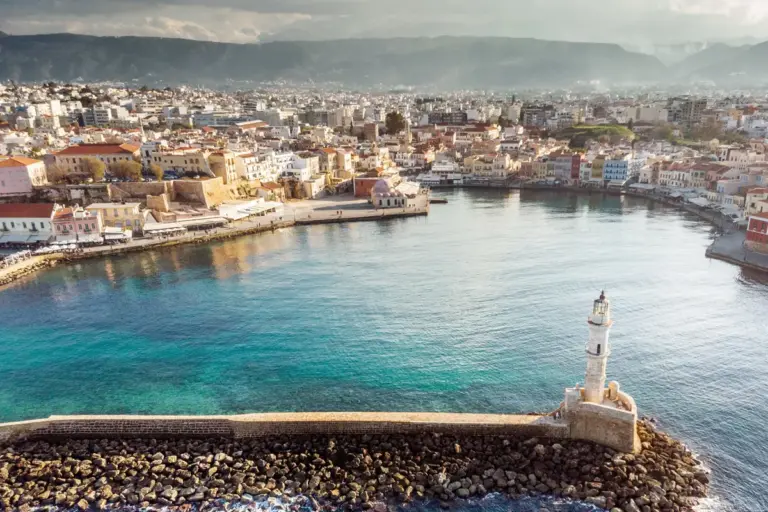
Chania combines the advantages of a regional city with sustained international appeal. Smaller and more residential than Heraklion, it boasts a thriving urban centre and a strong tourism sector. Although property prices are higher than in many regional cities, the market is more stable than in locations that are purely resort-driven, supporting both daily life and long-term ownership. Chania sits at the higher end of the regional city price range, with coastal areas running approximately €2,500 to €3,500 per square metre, reflecting its established appeal among international buyers. For a full breakdown of prices across the island, the guide to buying property in Crete covers each province in detail.
Kavala
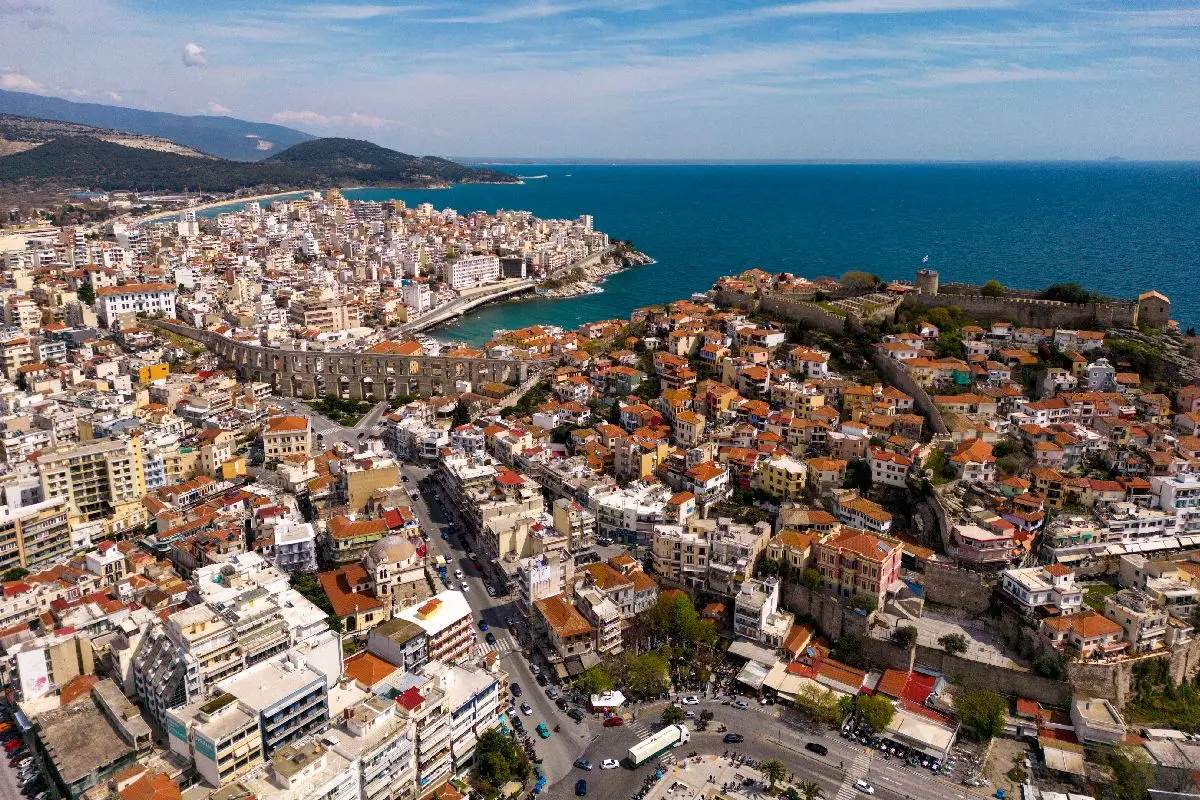
Kavala is a port city in northern Greece with ferry connections to nearby islands and a compact urban layout. It offers a quieter alternative to larger northern cities while maintaining access to services and transport links. The property market remains accessible, with demand mainly driven by local buyers rather than international investors. Indicative prices range from approximately €800 to €1,400 per square metre, making it one of the more accessible northern Greek cities, according to Spitogatos data for 2025.
Serres
Serres is a regional city with a predominantly local population and minimal reliance on tourism. Housing demand is driven by local residents and those in the surrounding rural areas, resulting in an affordable and stable market. The area is best suited to buyers who prioritise long-term residence and everyday functionality over visibility or short-term resale potential. Prices typically range from €600 to €1,100 per square metre, reflecting the city’s primarily domestic demand base.
Agrinio
Agrinio is one of the most affordable urban markets in Greece. It is supported by a local economy rather than external demand. Properties tend to offer more space at lower price points, but transaction volume is limited. The city appeals to cost-conscious buyers with realistic expectations around liquidity and a focus on size and long-term use. Entry-level pricing runs below €700 per square metre in many areas, making it one of the most affordable urban markets in the country.
Alexandroupoli
Alexandroupoli is a strategic regional hub in north-eastern Greece, supported by a university, hospital facilities and ongoing infrastructure investment. Although it remains relatively unknown internationally, it plays an important role within the region and maintains consistent housing demand. The city may therefore appeal to buyers seeking long-term investment opportunities rather than immediate market activity. Prices range from approximately €900 to €1,500 per square metre, with the upper end reflecting proximity to the waterfront and newer developments.
Risks and limitations of buying in lesser-known cities
While buying property in lesser-known Greek cities can offer stability and everyday usability, it also comes with limitations that should be assessed realistically. It is essential to understand these factors in advance in order to make an informed, long-term decision, rather than relying on assumptions shaped by larger or more visible markets.
One of the main considerations is lower liquidity. Regional city markets typically see fewer transactions than Athens or Thessaloniki, meaning properties may take longer to sell. This does not imply weaker demand, but rather a market driven by local needs rather than continuous turnover.
Related to this is the possibility of a slower resale process. Buyers should not expect to be able to sell quickly or hold their property for a short time. Property values in these cities tend to change gradually, reflecting employment, population stability and local economic conditions rather than external interest.
Another practical limitation is the limited availability of foreign-language services. In many regional cities, professionals, public offices and service providers primarily operate in Greek. For international buyers, this makes coordinated legal support all the more important for managing documentation, communication, and administrative procedures effectively.
Finally, international rental demand is often modest. While local rental markets may exist, particularly for students or residents, these cities are generally not suited to short-term or tourist-focused rental strategies. Buyers should therefore approach such locations with a long-term ownership perspective or with a view to their own use, rather than expecting to benefit from international rental exposure.
Recognising these limitations does not diminish the value of regional cities. On the contrary, it helps ensure that buyers choose locations that genuinely align with their objectives, risk tolerance and timescale.
Practical considerations before choosing a regional Greek city
Before buying property in an unknown Greek city, it is important to assess the location under normal, everyday conditions, not just at peak times. Visiting outside peak periods provides a more accurate picture of daily life, access to services and the rhythm of the local housing market.
If the property is intended for long-term residence or extended stays, buyers should verify access to hospitals and essential public services. While healthcare infrastructure in regional cities can be very good, availability and proximity can vary, so it is advisable to check in advance.
From a legal perspective, planning rules and zoning regulations must be carefully reviewed. Urban properties may still be subject to building restrictions, permit irregularities or limitations on future modifications. Proper due diligence ensures that the property can be used and maintained as intended.
Finally, it is important to align expectations with local demand rather than international benchmarks. Regional cities operate within domestic market dynamics, so understanding how the local population buys, rents and sells property is essential for making a sustainable ownership decision. Informed decisions, based on local knowledge and supported by proper legal advice from a Greek property lawyer, are consistently more reliable than choices driven by popularity or perception.”
Legal due diligence applies equally here
Purchasing property in a lesser-known Greek city does not entail additional risk or reduced legal certainty. Such markets often offer stable conditions, functional infrastructure and housing demand based on everyday use rather than short-term trends.
But buying in a regional Greek city involves the same legal steps, title checks, and planning verifications as buying in Athens or Thessaloniki. The market may be quieter, but the legal framework is identical. An In-Depth Property Consultation is the right starting point when you have a specific city or property in mind and want a clear legal picture before committing to anything.